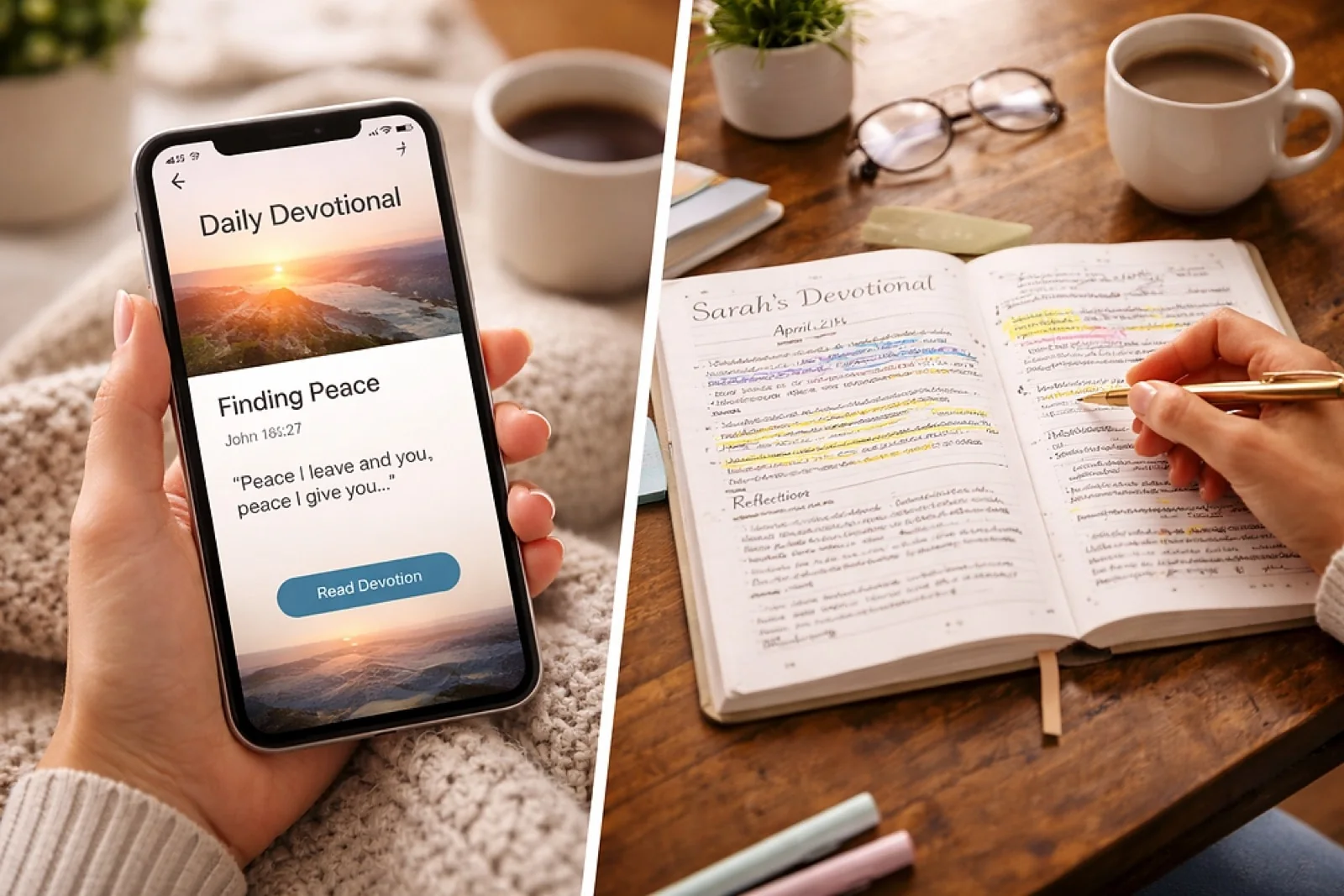
You've probably tried multiple devotional apps. Some are beautiful. Some have great teaching. Some send you daily reminders that make you feel spiritually productive. But if you're honest, most of them still feel disconnected from your actual life. You open the app, read the day's devotional, think "that's nice," and then close it without anything really changing.
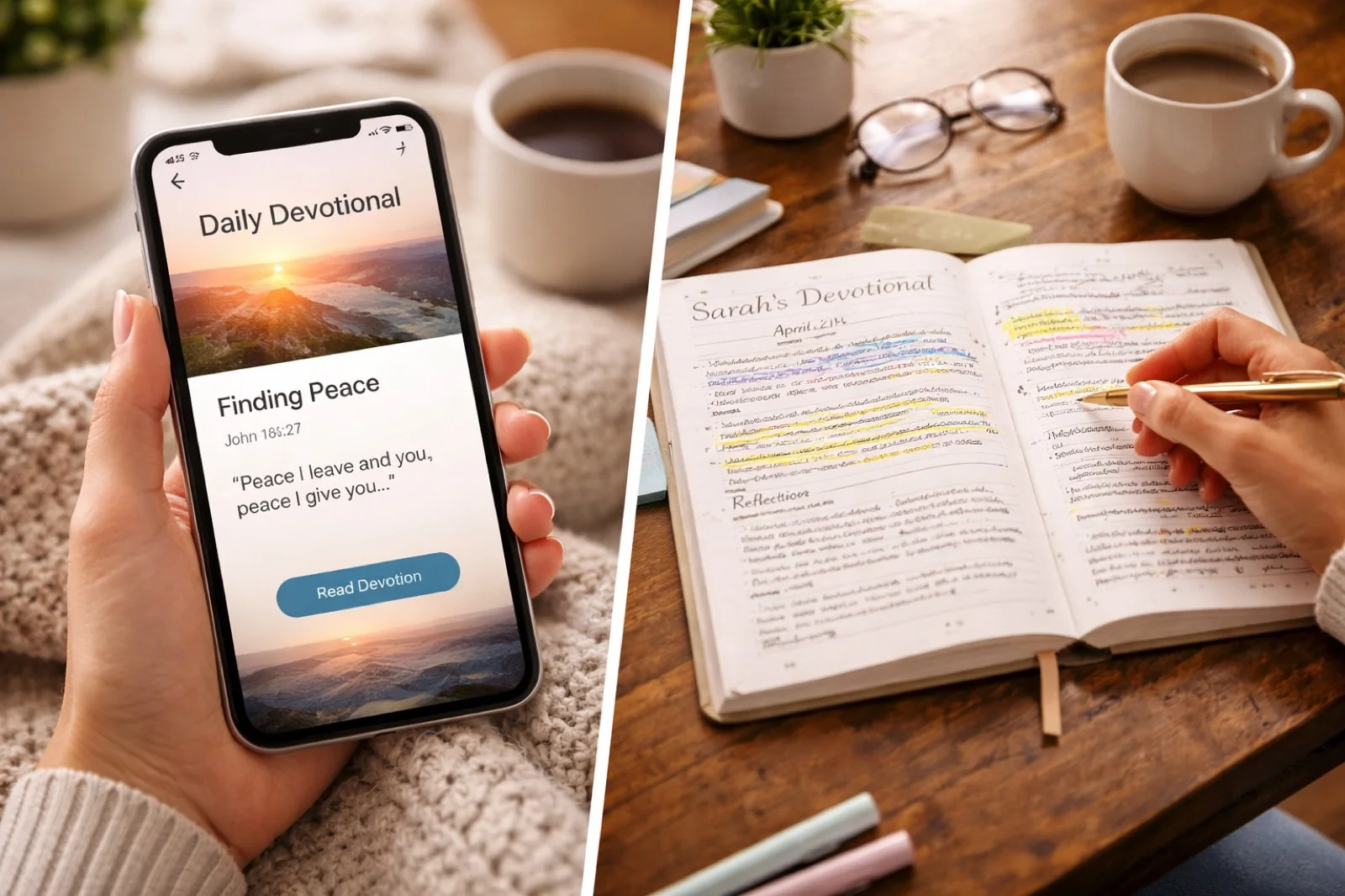
The problem isn't that generic devotionals are bad. Many of them are excellent. The problem is that they're written for everyone, which means they're written for no one in particular. They can't speak to your specific struggles, your season, or the questions you're actually asking because they don't know you. And that gap between generic content and your real life is where disconnection happens.
What Generic Devotionals Do Well
Let's be fair. Devotional apps and popular devotional books have a lot to offer. They're accessible. You can pull one up on your phone anytime, anywhere. They're beautifully designed with thoughtful graphics and easy-to-read layouts. They offer a variety, so you can choose from dozens of topics and teachers. They're also incredibly consistent, delivering new content every single day.
For someone just starting to build a habit of spending time with God, a devotional app can be a great entry point. It removes barriers and simplifies the process. You don't have to figure out what to read or where to start. The app does that for you.
Generic devotionals are often affordable or free, making them accessible to a wide audience. And because they're written by experienced teachers, the theology is usually sound, and the teaching is solid. These aren't small things.
Where They Fall Short
But here's where generic devotionals start to struggle. Because they're written for a broad audience, they have to stay general. The struggles they address are universal—trusting God, finding peace, dealing with anxiety—but they can't go deep into your specific struggles.
The devotional might talk about anxiety, but it doesn't know that your anxiety is specifically about your job, or your health, or your kid who's struggling. It offers general encouragement to trust God, but it can't address the specific fear that keeps you up at night. So you read it, you nod along, and then you're left to figure out how to apply it to your actual situation.
Generic devotionals also can't adapt to your season. The same content is delivered whether you're grieving, celebrating, in crisis, or coasting. You might be in the middle of a devastating loss, and the app sends you a devotional about gratitude.
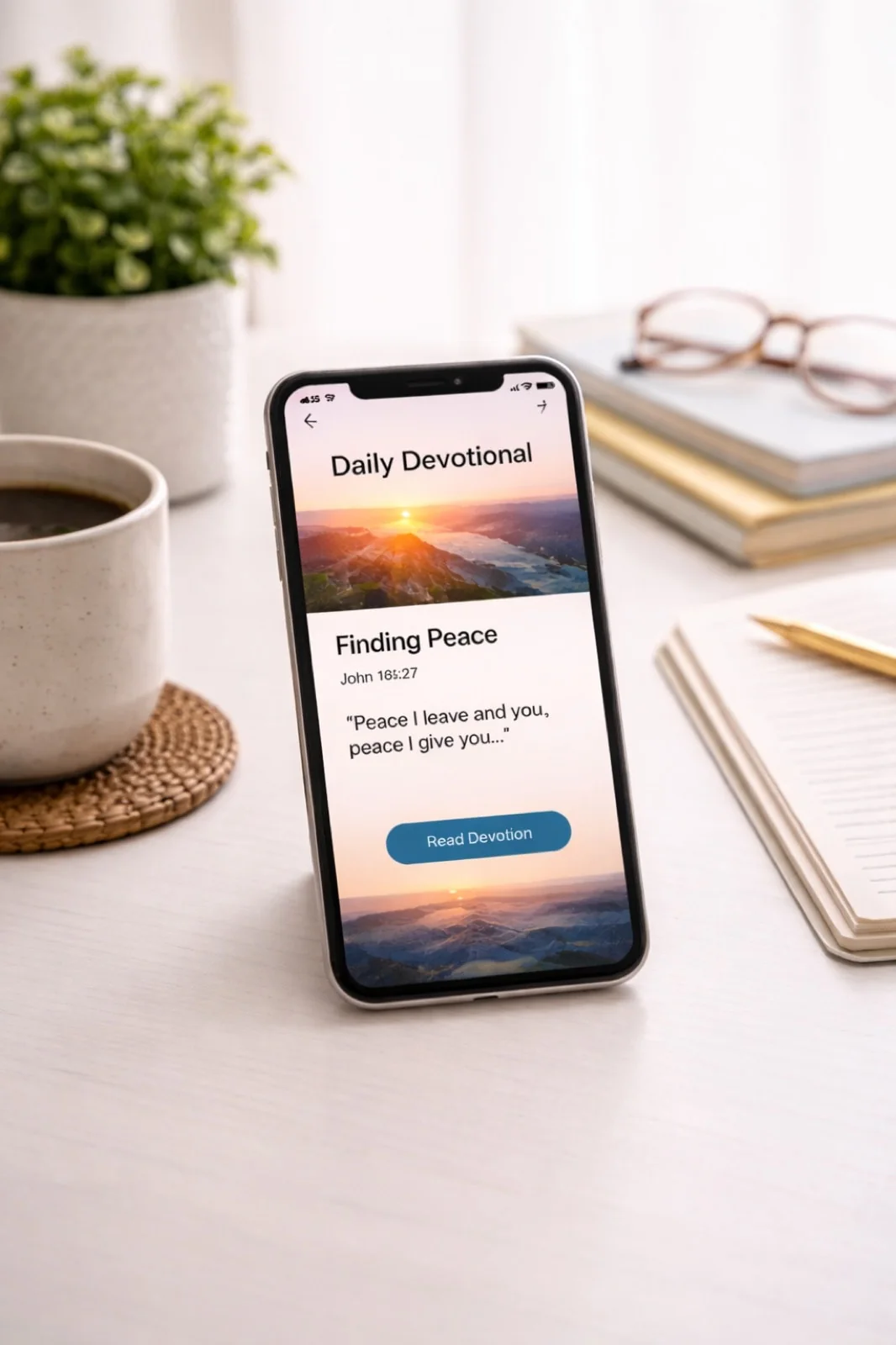
You might be experiencing a breakthrough, and the devotional is about enduring hard times. The mismatch creates distance instead of connection.
There's also the issue of spiritual language and learning style. Some people connect with God through contemplative silence. Others need active engagement. Some learn best through stories. Others through theology. Generic devotionals have to pick one approach and hope it works for you. If it doesn't match how you're wired, the content feels flat, no matter how good it is.
And then there's the obligation factor. When you're consuming the same content as millions of other people, it starts to feel like a checkbox. You read it because you're supposed to, not because it's actually feeding you. The devotional becomes part of your spiritual to-do list instead of something that brings life.
What Personalized Devotionals Offer That Generic Ones Don't
A personalized devotional starts with you. Not a version of you that fits into a demographic category, but the actual you with your specific struggles, your season, your questions, and your spiritual style.

When a devotional is created specifically for you, the Scripture passages are chosen because they speak to your life right now. If you're wrestling with control, you get passages about surrender. If you're grieving, you get psalms of lament. If you're in a season of transition, you get Scripture about God's faithfulness in uncertainty. Every verse is there for a reason, and that reason is you.
The reflections are written for your situation, not a hypothetical one. A personalized devotional doesn't say "If you're struggling with fear." It says, "The fear you're carrying about your health is real and heavy." It names what you're actually facing and speaks directly into it. The prayers aren't generic. They're written in language that matches how you talk to God.
The timeline also matches what you need. If you need a five-day devotional to process something specific, that's what you get. If you need thirty days to work through a major transition, the devotional is built for that. You're not trying to squeeze your healing or growth into someone else's predetermined schedule.
Personalized devotionals also make space for your actual questions, not the questions the author thought you might have. If you're wrestling with doubt, the devotional doesn't rush you toward certainty. If you're angry, it doesn't skip to forgiveness. It meets you in the mess and gives you Scripture and reflections that hold space for where you actually are.
The Cost vs. Value Conversation
Yes, personalized devotionals cost more than downloading a free app. That's the reality. But you're not paying for content. You're paying for something designed specifically for your life.
Think about it this way. A self-help book costs $15 and might offer a few insights that apply to you. A therapist costs $100 an hour and speaks directly to your specific situation. Both have value, but the investment is different because of the level of personalization.
A personalized devotional is somewhere in between. It's more than a book because it's created for you. It's less than ongoing therapy because it's a one-time creation. But the value is in knowing that every word, every Scripture, every reflection was chosen because it fits your life, your struggles, and your season.
One of our clients, Melissa, said it this way: "I've done devotionals before, but this was the first time I felt like God was speaking directly to me instead of to a crowd." That's what personalization does. It closes the gap between generic encouragement and the specific place where you need to hear from God.
Making the Choice
If you're happy with a devotional app, keep using it. There's no shame in that. But if you've been cycling through devotionals trying to find one that actually fits, if you keep feeling like the content is close but not quite right, if you're craving something that speaks to your actual life instead of a generalized version of it, personalization might be exactly what you need.
You can keep trying to make generic content work, or you can invest in something created specifically for you. One approach is easier. The other is more effective.
You can keep trying to make generic content work, or you can invest in something created specifically for you. One approach is easier. The other is more effective.
If you're ready to experience a devotional written just for you, explore personalized devotionals here. Or if you want to start with something free to see what personalized content feels like, download our Starter Guide and get a sense of what changes when Scripture is chosen with your specific heart in mind.