

My son loves handwriting. He’s good at it, and he actually enjoys the practice, which not every parent can say. But one day I looked at what he was tracing and thought: why waste all this on random words? If he’s going to spend the time writing anyway, he could be writing Scripture.
That simple shift is where Faith-Filled Handwriting came from.
Turning Practice Into Time in the Word
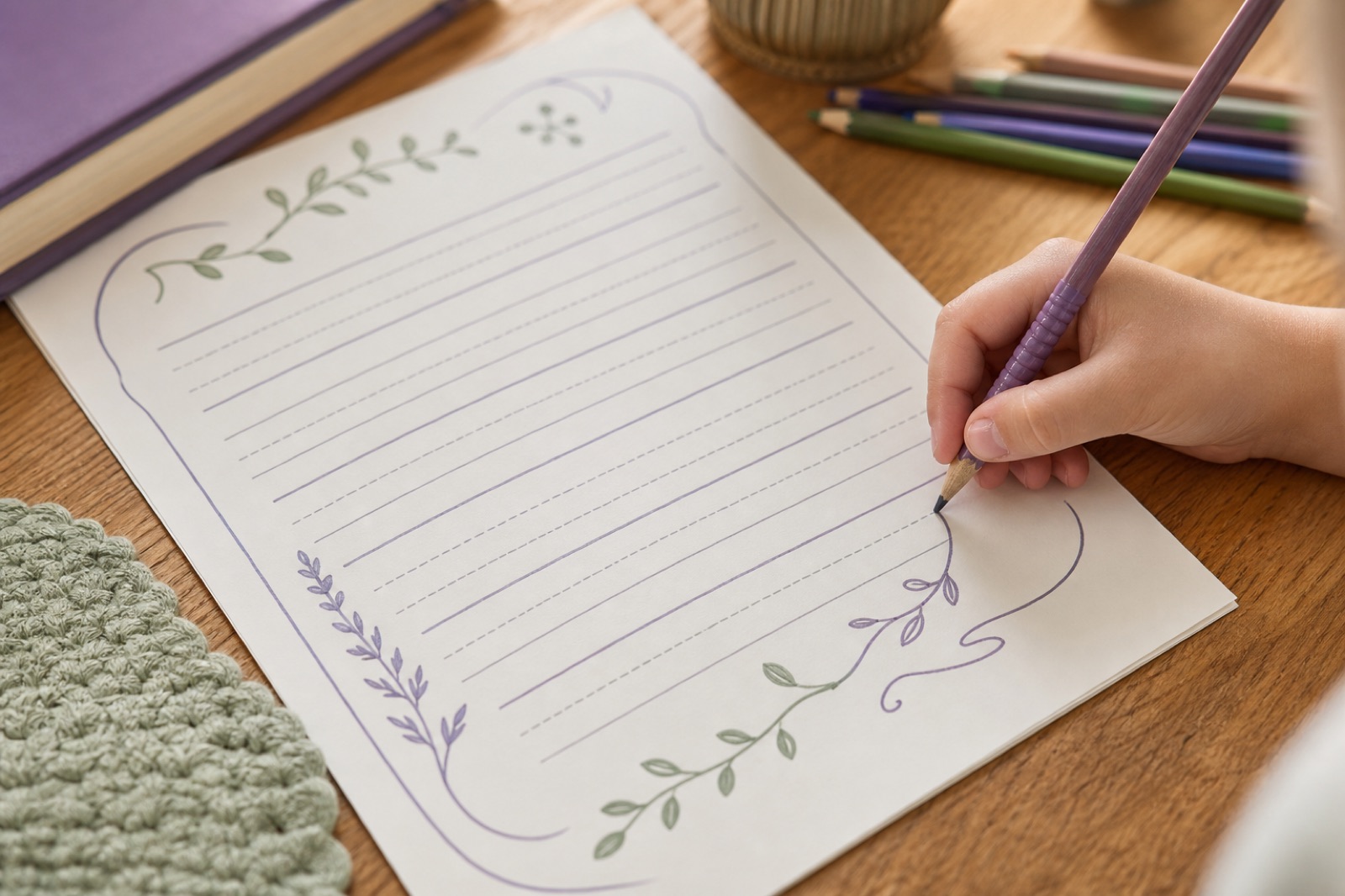
The idea is easy to grasp. Handwriting practice is already part of so many kids’ days, whether at home or at school. Faith-Filled Handwriting takes that same effort and points it at God’s Word, so the time your child is already spending becomes time in Scripture too.
There’s something that sinks in when a child slows down to write a verse letter by letter. It moves past skimming and into really seeing the words. The practice does double duty: their handwriting grows, and God’s Word gets written a little deeper into them at the same time.
Three Levels, Growing With Your Child
Faith-Filled Handwriting meets kids at three stages, and each one asks something different of them.
The youngest level is built around tracing, so little hands can follow the letters and take in the words as they go. The middle level focuses on penmanship in two forms, guided tracing and copywork of the verse in both print and cursive, so your child strengthens their handwriting while growing familiar with the Scripture they’re forming. The oldest level shifts into something different altogether. It moves past penmanship and into building actual writing skill: your child brainstorms around the Scripture, shapes those ideas into sentences, and grows them into full paragraphs. They’re still writing, but now they’re developing how they write and think, not just how neatly they form the letters.
That progression is the whole heart of it. A child starts by simply tracing the words and grows into someone who can take a verse, wrestle with it, and build their own thoughts around what it means.
A Natural Pair With Scripture Character Development
This works beautifully alongside our Scripture Character Development units, and it’s not by accident.
When your child is learning about a trait like self-control, writing out the very Scripture that speaks to it presses the lesson in from another direction. They hear it, they study it, and then they write it in their own hand. Understanding and practice reinforce each other, and the verse stops being something abstract and becomes something they’ve genuinely worked with.
If you’re using the Self-Control unit, pairing it with matching handwriting practice gives your child one more meaningful way to let the words take root.
Journaling / Reflection Prompts
What is your child already practicing that could point toward God’s Word instead?
Which verse would you love to see written in your child’s own hand this week?
How might slowing down to write Scripture change the way your child receives it?
Start With the Free Scripture Handwriting Sampler
You can see how it works before choosing a level. The Scripture Handwriting Sampler is free, ready to print and bring to your table this week.
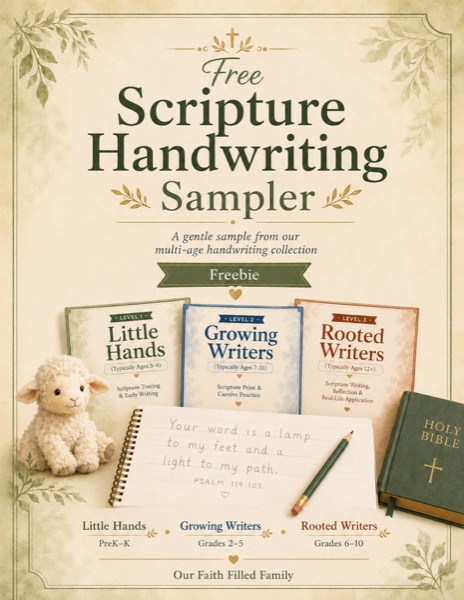
Scripture Handwriting Sampler
A free sampler you can print today and bring straight to your table.
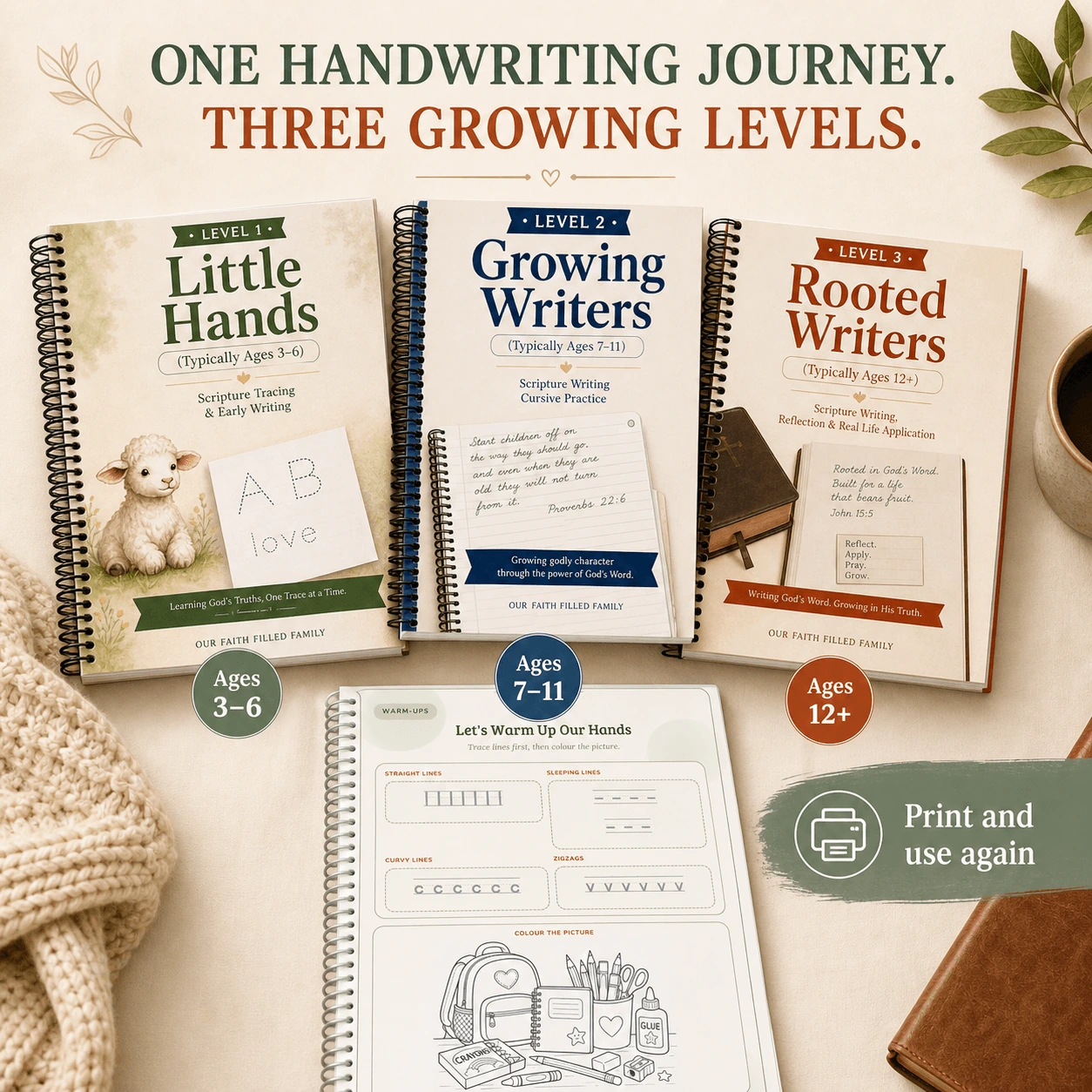
Faith-Filled Handwriting: Complete Writing Journey
All three levels — tracing, copywork, then written reflection — for one child or for siblings at different stages.
Explore all three levels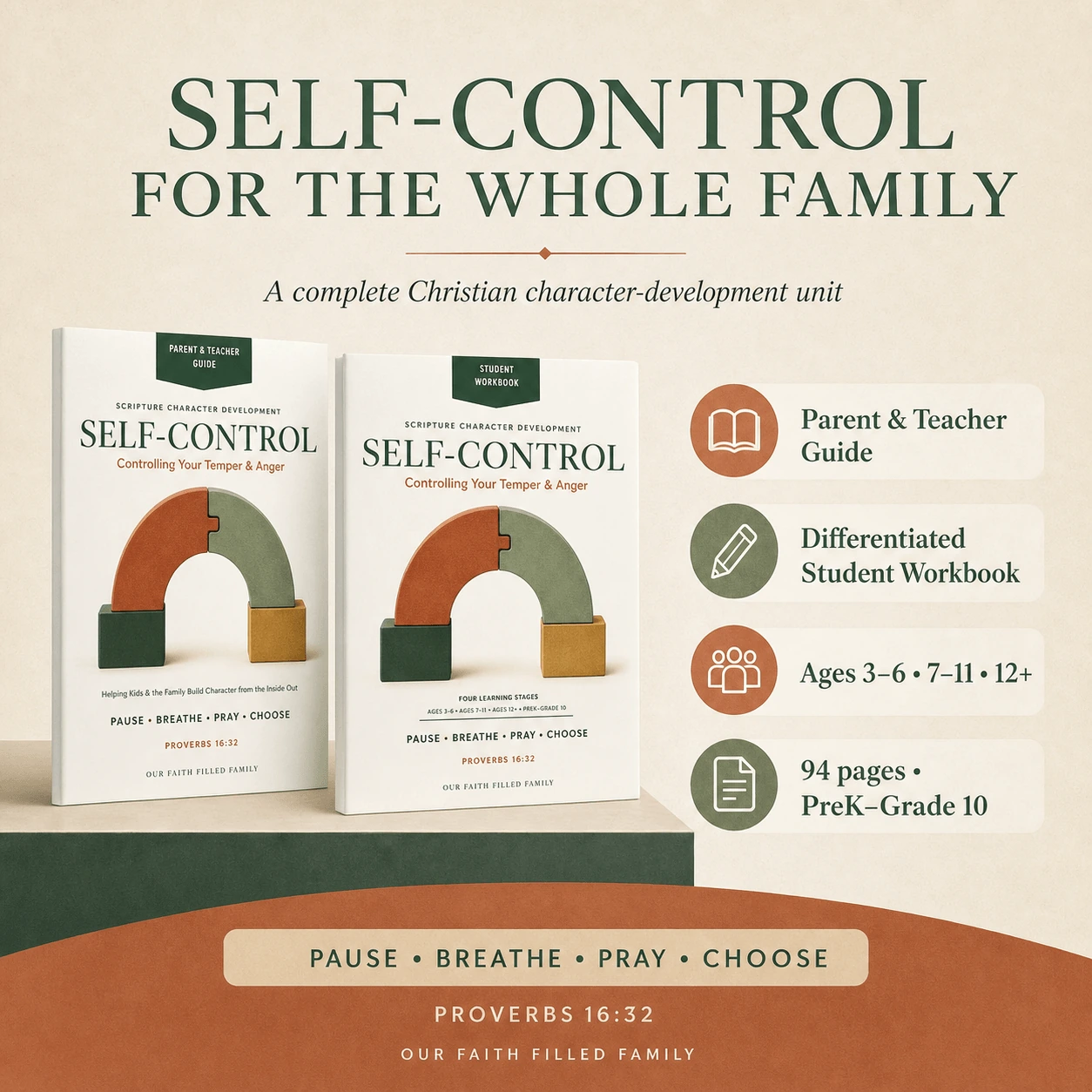
Scripture Character Development: Self-Control
Pair the handwriting practice with the unit whose verses your child is writing out.
See the Self-Control unit